Soaring into Spectacle: The Mifflin County Glider Competition

Every spring, the skies above the Juniata River Valley come alive with a quiet kind of thrill—one powered not by engines, but by wind, skill, and the art of flight.

Soaring into Spectacle: The Mifflin County Glider Competition
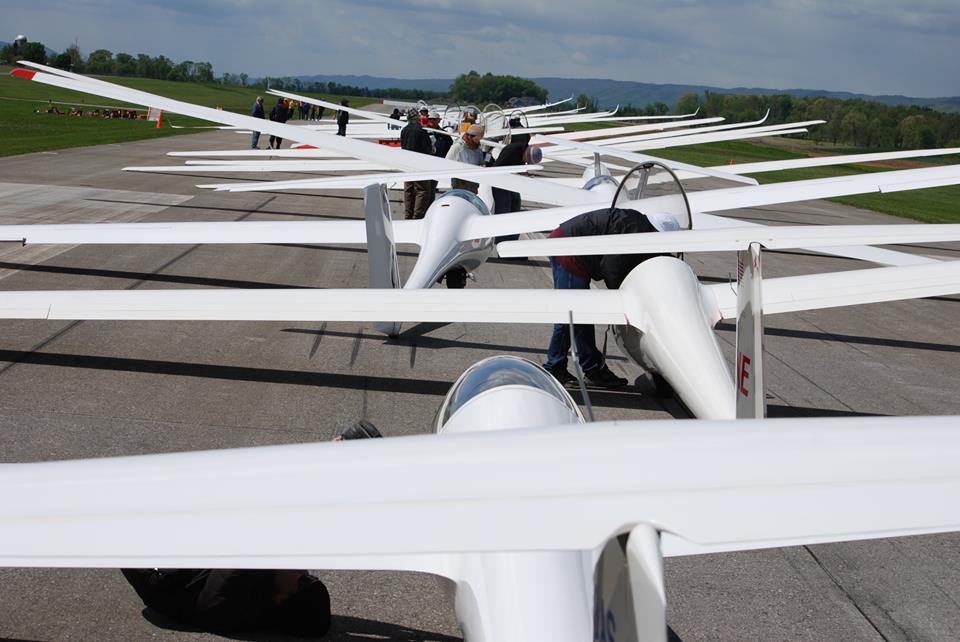
Aircraft enthusiasts and glider gurus from across the United States and Canada flock to Mifflin County Airport for the annual Soaring Contest—an event that transforms this local airfield into one of the most exciting aviation showcases in the country.

In 2026, the stakes soar even higher as the airport hosts the 15m and Sports Class Nationals from May 15 through May 23. These elite competitions draw top pilots flying sleek, engine-less sailplanes capable of traveling up to 500 miles per flight and reaching speeds of 150 mph—all by harnessing the natural energy of the sky.

The Art of Engine-Free Flight

Unlike traditional aircraft, gliders rely entirely on the forces of nature. Each flight begins with a tow plane pulling the glider into the air via a long rope. Once the pilot reaches the right altitude, the rope is released—and the real challenge begins.

With no engine to provide thrust, pilots must skillfully read the landscape and sky to stay aloft. They search for:

  • Ridge lift: wind flowing upward along mountain slopes
  • Wave lift: powerful air currents created by winds crossing mountain ranges
  • Thermal lift: rising columns of warm air

It’s a delicate balance of lift, drag, and gravity—and a true test of both strategy and instinct.

Interestingly, glider pilots aren’t the only ones who master this technique. Look closely and you might spot hawks or vultures circling nearby, riding the same thermals to gain altitude without flapping a wing.

A Front-Row Seat to Flight

One of the best parts? You’re invited to watch.

Spectators are welcome to come out and experience the magic of takeoff. Each day—typically between 10 a.m. and 2 p.m., weather permitting—gliders line up on the runway, ready to launch into the sky.

Pack a picnic, grab a seat at the airport pavilion, and enjoy a front-row view as these graceful aircraft are lifted one by one into the air. It’s a peaceful yet awe-inspiring scene you won’t forget.

Why Here?

Pilots consider this region one of the best in the United States for soaring. The surrounding ridges create ideal updraft conditions, making it a prime destination for competitive gliding and record-setting flights.

Don’t Miss It

Whether you’re an aviation enthusiast or just looking for a unique outdoor experience, the Soaring Contest offers something truly special. It’s where science meets sport—and where the sky is anything but the limit.

Come watch, relax, and witness the beauty of flight in its purest form.

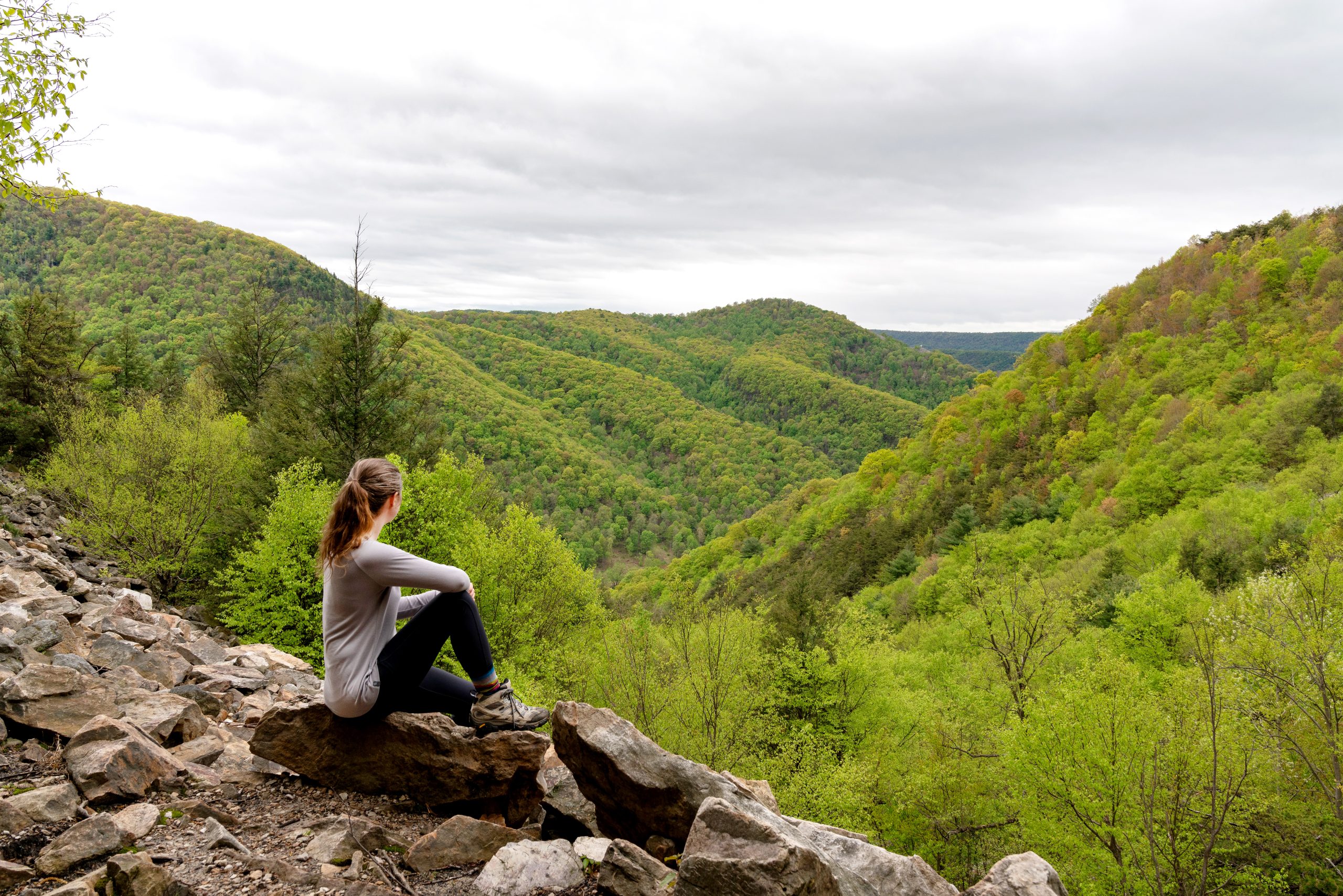
Valley Vistas

Photo by Stuck on the Go at Thousand Steps
Kishacoquillas Valley (Big Valley) is home to some of the most breathtaking views in the Juniata River Valley, and we’ve rounded up six spectacular vistas that showcase the region’s rolling farmland, rugged ridgelines, and wide-open skies. Whether you’re a seasoned hiker or simply chasing a picture-perfect overlook, these stops offer unforgettable perspectives of one of Pennsylvania’s most beautiful landscapes. Dive in and discover where your next adventure begins.

Thousand Steps– Known as one of the most famous hikes in Pennsylvania, this hike will challenge even the most experienced hiker, but the reward is in the incredible view of Mapleton, the Juniata River, and Route 22 and 655 from the top of the steps. Easily accessed from Route 22, between Mount Union and Huntingdon, the 1,000 steps trailhead starts at the parking area along the main highway. Use GPS coordinates, 40.39169, -77.91420 to find the parking area. This hike covers approximately 850 feet of elevation change over the course of .5 miles and technically, there are 1,037 steps! At the top, not only can you enjoy some fantastic scenic overlooks, but also an old stone quarry, and the ruins of a train shed.

Fun fact- Did you know that the steps were built by the men who worked in the Ledge Quarry at the top of the mountain so they could get to and from work every day?

Jack’s Mountain Overlook- This overlook gives you not only breathtaking view, but two magnificent views of the valleys below. This popular pull-off at the crest of the mountain for vehicles that have made the climb up the steep road from the valleys below affords views of Big Valley on one side of the road and Ferguson Valley on the other side. Starting every fall, volunteers from the Jack’s Mountain Hawk Watch are stationed at the overlook to count the migrating birds above. Stop by and chat with the friendly volunteers to learn about hawks and more!

Stone Mountain Hawk Watch -Located in the Rothrock State Forest near the Mifflin-Huntingdon County line. This scenic overlook features a platform constructed by volunteers from the State College Bird Club and Juniata Valley Audubon for the purpose of observing and recording the fall hawk migration. The hawk watch is located approximately a third of a mile from the parking area along Allensville Road. Use GPS coordinates, 40.56904, -77.82863 to find the parking area. This hike is also part of the Standing Stone Trail and uses orange-blazed markers. From the platform, enjoy views of Big Valley to the east, Rothrock State Forest to the west, and Standing Stone Trail to the south.

Sausser’s Stone Pile– This incredible rock formation and scenic overlook is just a mere .4 miles from Stone Mountain Hawk Watch. Continue north on Standing Stone Trail past the hawk watch sign to reach the stone pile. The 180-degree views when facing Huntingdon County and to the south, you’re facing in the direction of the Thousand Steps. To the north, you’re facing Greenwood Furnace State Park. Look west and look down about 50 yards to see the stacked-stone feature called “Indian Outlook.”

Big Valley Vista is located along Millheim Pike in Mifflin County in Bald Eagle State Forest. Use GPS coordinates 40.78464, -77.51479 to guide you to this excellent view 3 miles northeast of Siglerville. No hiking required!

New Lancaster Valley Vista is located along Locust Ridge Road in Snyder County in Bald Eagle State Forest. Use GPS coordinates 40.79362, -77.31011 to navigate to this extraordinary vista facing Milroy and Mifflin County in the distance. No hiking required!

Amish of the Kishacoquillas Valley

Kishacoquillas Valley is unique in that there are three distinct Amish Groups with three different colored buggies.

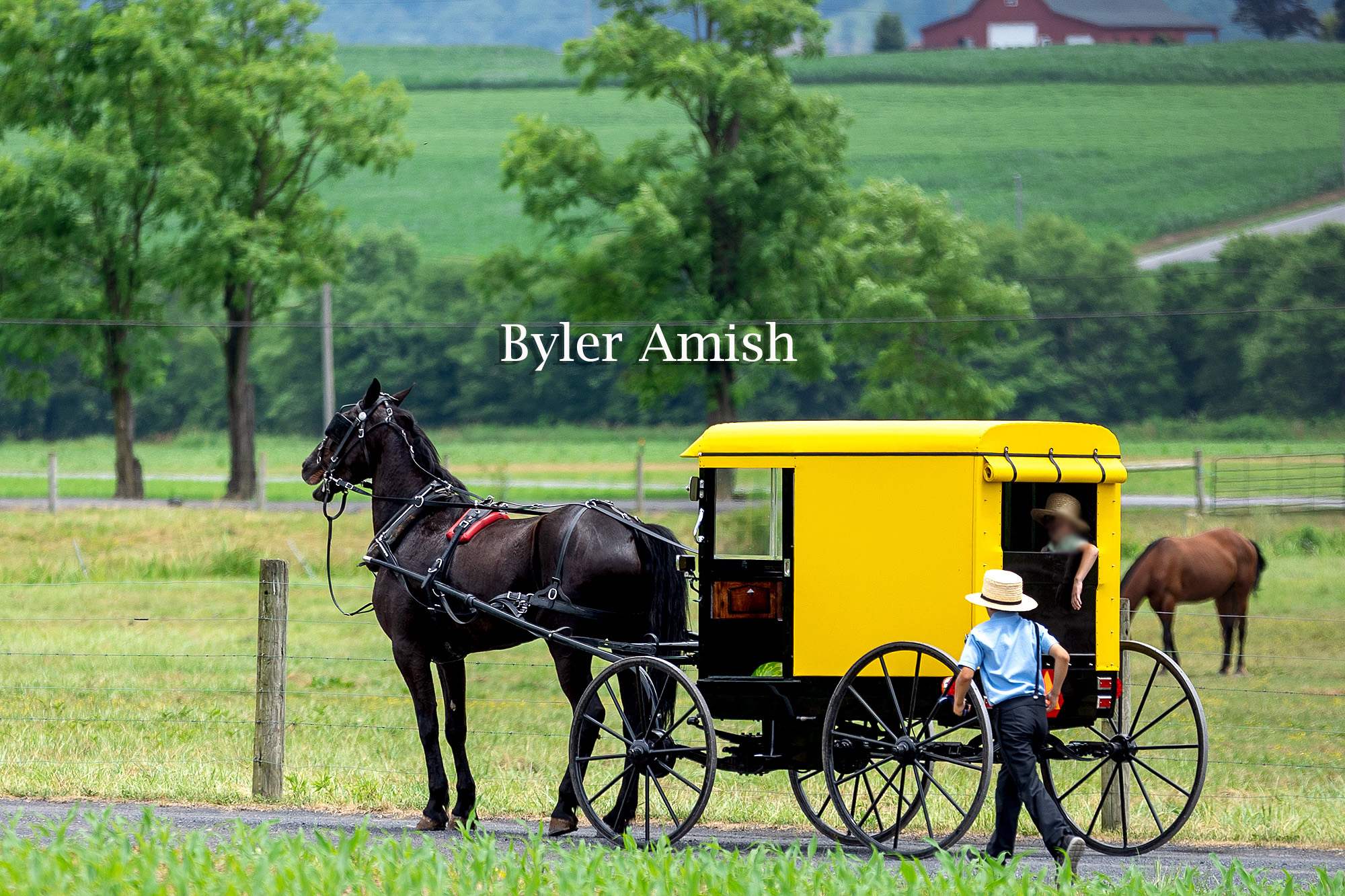
Byler Amish

The Byler Amish, a small and conservative subgroup of the Amish, have their roots in Mifflin County, Pennsylvania, where they formed after a division from the Lancaster County Amish in 1849. Known locally as “Alt Gemee,” meaning “Old Church,” this community is distinct for its adherence to traditional practices, including the unique yellow buggies that earned them the nickname “yellow-toppers.” Their commitment to simplicity is also reflected in their dress, with men wearing only a single suspender as part of their attire, which is unique to Kishacoquillas Valley.

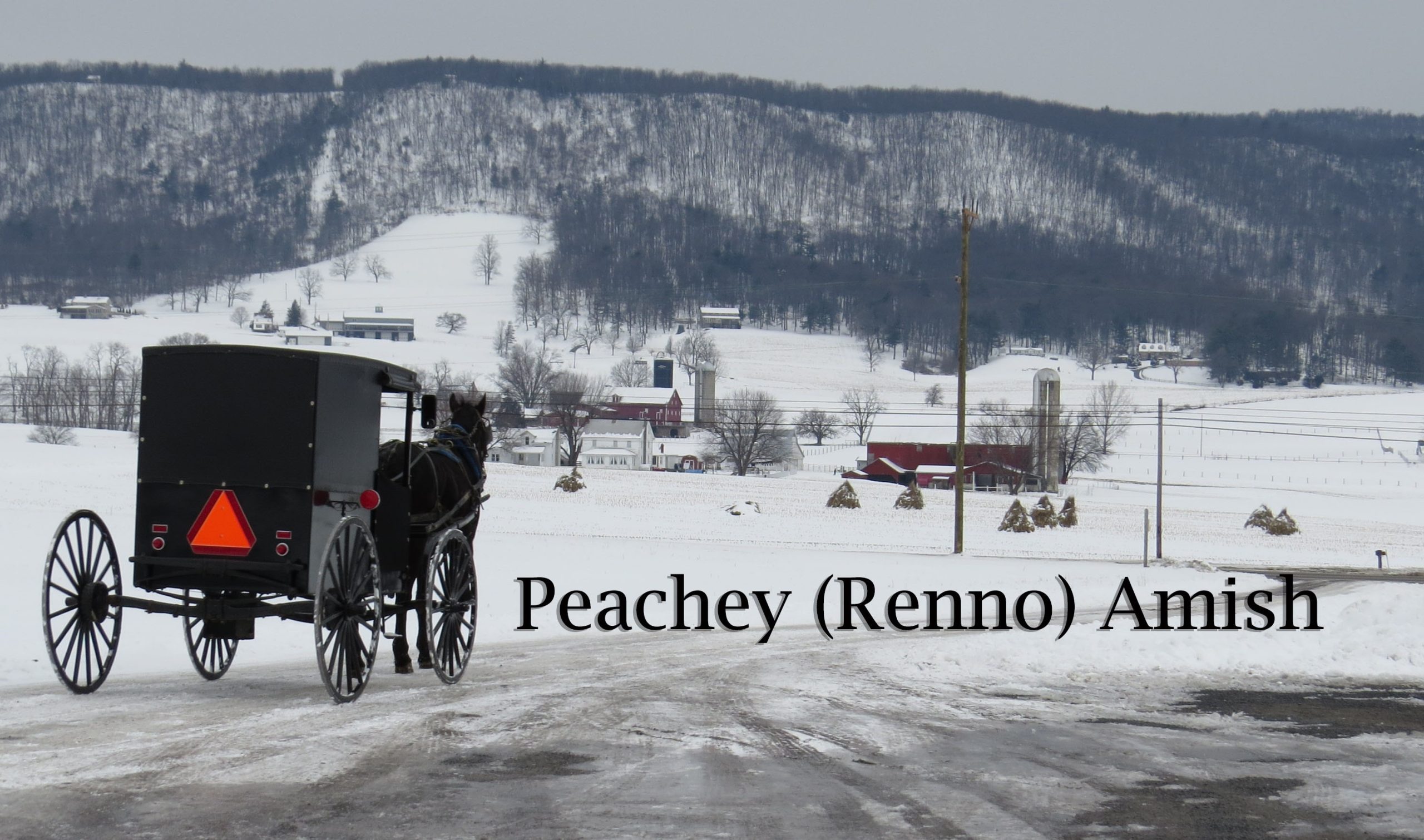
Peachey (Renno) Amish

The Peachey, or Renno, Amish—often called the “black-toppers.” They follow traditional Amish customs, including shunning. Men may wear a single suspender, unique to Kishacoquillas Valley, and women wear black bonnets. Homes are often painted white with red barns, and carpets, curtains, and screens are commonly used. Indoor plumbing is also permitted. Their black buggies are square in shape and are closed in for daily life.

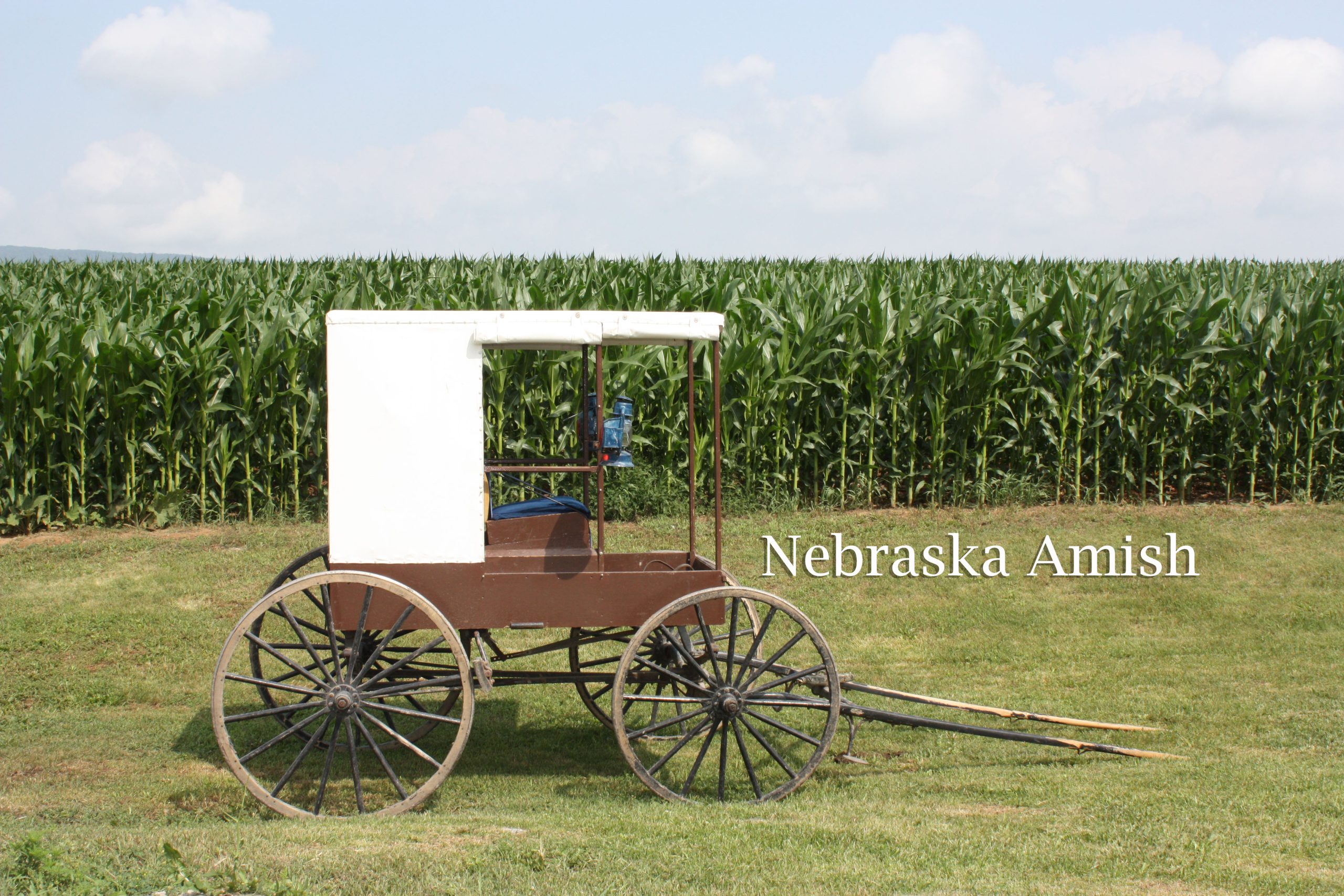
Nebraska Amish

The Nebraska Amish, known as the “white-toppers” for their white buggy covering, are  the most conservative Amish groups in the country. Despite their name, they are centered in Mifflin County, Pennsylvania.

Men wear white shirts, brown or denim trousers, and wide-brimmed hats, while women wear long dark dresses, with scarfs as head coverings. Their bishops, ministers and deacons ware gray coats and trousers.  Their buggies are open sided even during the winter.  Homes and barns are often left unpainted, and items like curtains, screens, and carpets are sometimes avoided to keep life simple.